
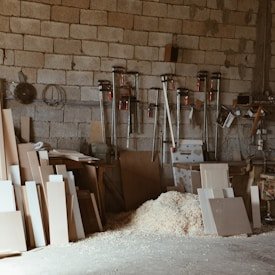
Wooden boat building is one of the oldest and most rewarding disciplines in woodworking, blending structural engineering with timeless craftsmanship. Building a boat from wood asks you to think in three dimensions, work to fine tolerances, and respect the way timber moves with moisture. For many makers it represents the ultimate test of skill, patience, and planning. The same respect for moisture decides a far smaller panel: a cutting board is wetted and dried every day it is used, which is why choosing wood for one comes down to pore structure and hardness, as best wood for a cutting board sets out.
Choosing a Construction Method
There are several established approaches, each suited to different skill levels and goals. Clinker (lapstrake) building overlaps planks for a strong, flexible hull and a classic look. Carvel planking lays planks edge to edge over frames for a smooth surface. Stitch-and-glue, which joins plywood panels with epoxy and fiberglass tape, is the most beginner-friendly route and a great first project. Strip planking, where thin strips are edge-glued over a mold, produces beautiful canoes and small craft. Your choice depends on the boat you want, your skill level, and how much hand-shaping you enjoy. Stitch-and-glue begins by breaking down full sheets of marine plywood, which is a cut a miter saw cannot reach across at all, and that difference is the whole of miter saw vs circular saw.
Selecting the Right Timber
Traditional boatbuilding favors rot-resistant, stable species such as white oak for frames, cedar and larch for planking, and mahogany for trim. Marine-grade plywood is essential for panel construction. Whatever you choose, the wood must be properly seasoned and the grain oriented to handle the loads and constant moisture a hull endures. Boat stock often arrives rough sawn, and if there is no jointer in the shop, squaring lumber without a jointer sets out four ways to bring it flat and true first. The cheap softwood boards that suit jigs, moulds and shop fixtures are a different grade of decision, and how the pines separate from one another and from poplar is worked through in poplar vs pine.
Tools and Fastenings for Marine Work
Copper rivets, silicon-bronze screws, and marine epoxy are the fastenings of choice because they resist corrosion in wet environments. Beyond your standard woodworking kit you will want a block plane for fairing, clamps in quantity, and dedicated mixing equipment for epoxy. Scarf joints lengthen planks and keels invisibly and are a signature boatbuilding skill worth practicing on scrap first, while careful caulking of seams keeps traditional hulls watertight. Precision matters: a hull is only as sound as its weakest joint. A router handles the long rounded edges and rabbets that boat work is full of, and matching its speed to the cutter matters more as the bits get bigger, which our router bit speed chart covers by diameter.
Finishing for the Water
A wooden boat lives in a punishing environment, so finishing is about protection as much as beauty. Multiple coats of marine varnish or a two-part polyurethane shield brightwork from UV and water, while bottom paint guards submerged surfaces. Annual maintenance is part of the deal, and part of the pleasure, of owning something you built by hand. The same order of operations applies to furniture that never sees water, and our guide to wood finishing techniques walks through sanding, staining, sealing and top coats one layer at a time. Varnish and two-part polyurethane work on a hull because nothing ever cuts into them; where a surface is cut on, the choice inverts toward an oil that soaks in, which choosing a finish for a cutting board explains.
Best Beginner Boat Projects
If you are new to boatbuilding, start small. A stitch-and-glue dinghy, kayak, or canoe uses plywood panels joined with epoxy and fiberglass tape, requires no lofting or steam-bending, and can be completed in a few weekends. These projects teach the core principles of hull shape, epoxy work, and finishing before you commit to a larger, plank-on-frame build. Plywood panels and solid mahogany trim pull stain at different rates on the same boat, and the abrasive you stop at is what evens that out, as what grit sandpaper to use before staining works through. Sanding epoxy and marine plywood is also where the finest dust in the shop comes from, and the filter classes that stop it are compared in N95 vs P100 for woodworking.
Frequently Asked Questions
What is the easiest boat for a beginner to build?
A stitch-and-glue plywood dinghy or kayak is the most beginner-friendly. It avoids steam-bending and complex lofting, relying instead on cutting panels and joining them with epoxy and fiberglass tape. The same resin does structural work in furniture as well, where it is cast thick rather than spread thin, and the depth limits that change with it are set out in how to make an epoxy river table.
What wood is best for building a boat?
Rot-resistant species like white oak for frames, cedar or larch for planking, and mahogany for trim are traditional choices. Marine-grade plywood is essential for stitch-and-glue panel construction.
Want the complete plans and step-by-step training?
Get instant access to thousands of detailed woodworking projects.
Join The Training